
The Journey of Potash: From Underground Deposits to Fertilizer Production
Understanding the geology, mining methods, and processing steps behind one of the world's most important agricultural minerals
Potash plays a critical role in modern agriculture, providing one of the three essential nutrients plants need to grow. But before potash becomes fertilizer used around the world, it goes through a complex journey that begins deep underground.
Understanding how potash forms, how it is mined, and how it is processed highlights the engineering and geological expertise required to bring this important resource to the surface.
Where Potash is found underground
Before mining operations begin, engineers and geologists must understand the layers of earth that sit above potash deposits. These layers were formed over millions of years and each presents unique conditions for drilling and mine development.
Geological layers:
Glacial Till: Loose sediments left behind by ancient glaciers. These materials often consist of clay, sand, and rocks deposited during glacial movement.
Shales: Fine grained sedimentary rock formed from compacted mud. Shale layers can act as barriers and influence groundwater movement.
Sands and Sandstone: More porous formations that can contain groundwater. These layers require careful engineering during drilling operations.
Limestones: Hard marine sedimentary rock that forms a major structural layer underground.
Salts and Potash: Deep evaporite deposits where potash minerals are found. These deposits formed when ancient inland seas evaporated, leaving behind concentrated mineral salts.
Understanding these geological layers is essential for designing safe and efficient mining operations.
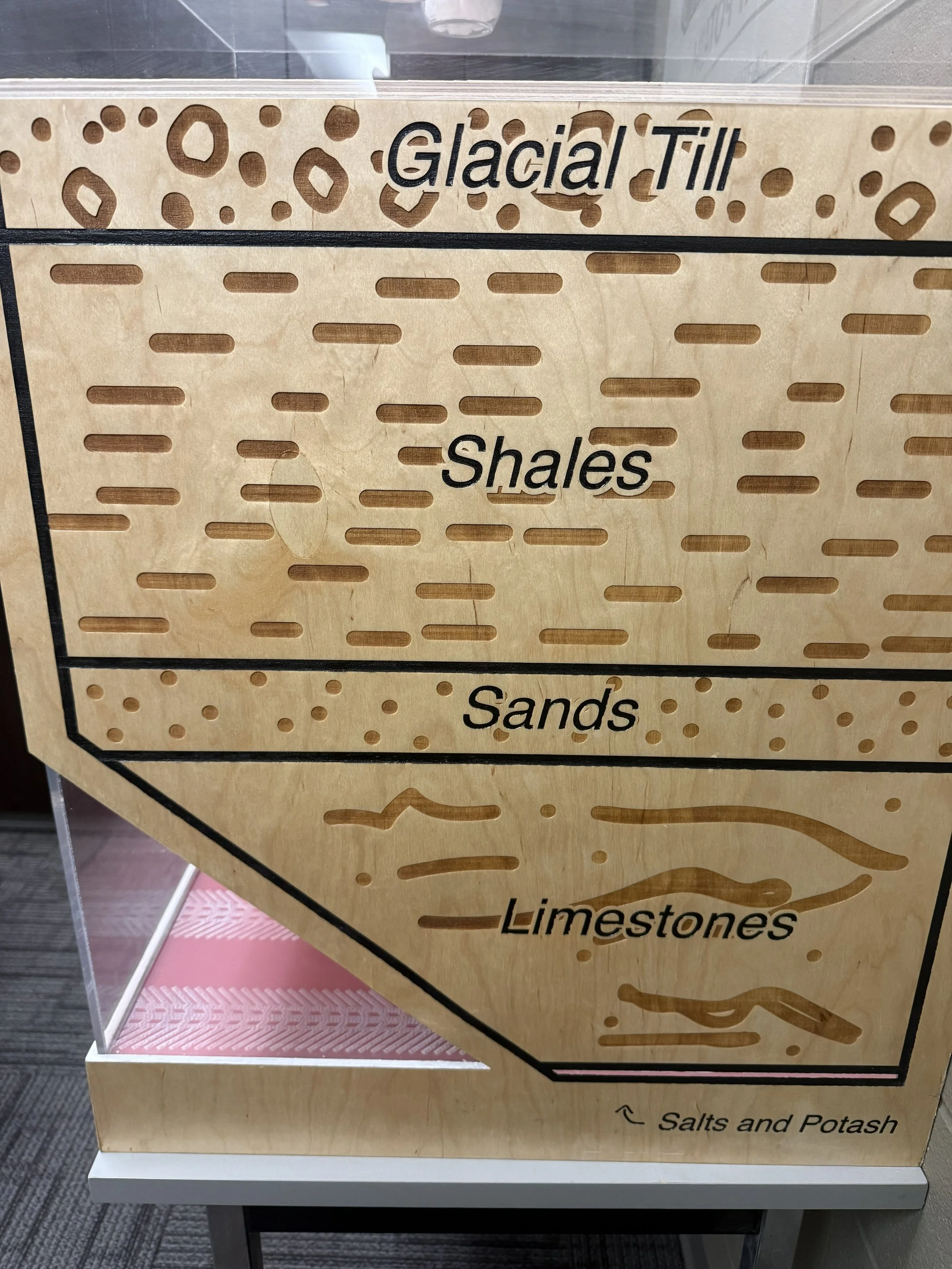
Geological layers diagram showing glacial till, shale, sandstone, limestone, and salt formations.
How Potash is minED
Once potash deposits are located deep underground, mining operations can begin. There are two primary methods used depending on the depth and geological conditions of the deposit.
Conventional underground mining
In conventional mining operations, vertical shafts are drilled deep underground, often exceeding 1000 meters. From these shafts, large mining machines cut through the potash seam.
To maintain structural stability, pillars of ore are intentionally left behind to support the mine roof. The mined ore is then transported to the surface for processing.
solution mining
When potash deposits are too deep or complex for conventional mining, solution mining is often used.
In this method, wells are drilled into the potash layer and hot water or brine is injected underground. The water dissolves the potash minerals, creating a mineral rich solution that can be pumped back to the surface.
Both methods require extensive geological knowledge, engineering expertise, and careful operational planning.
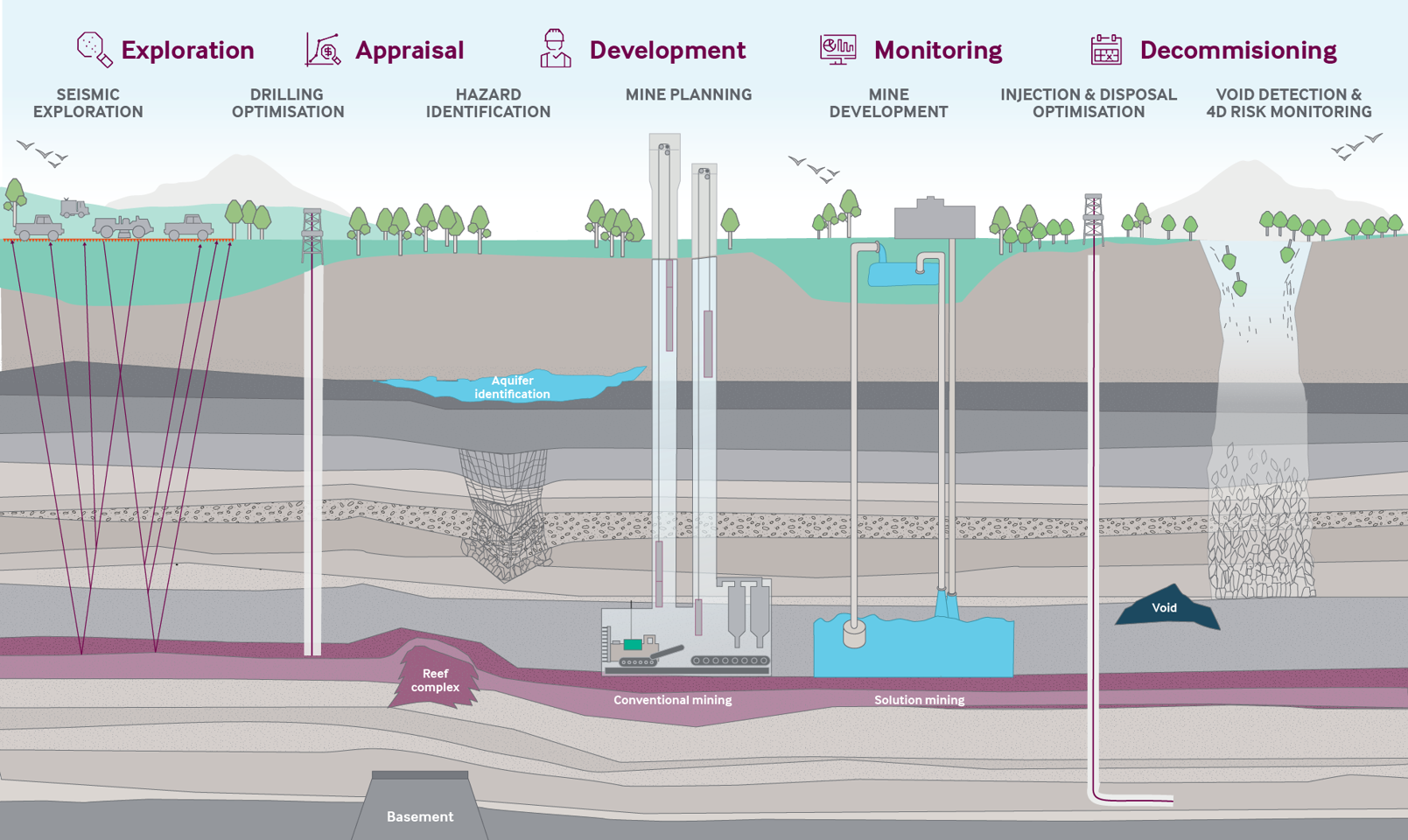
Potash mining methods diagram (conventional vs solution mining).
From ore to fertilizer: Processing potash
Mining potash is only the beginning of the journey. Once the ore reaches the surface, it must go through several processing steps before it becomes the final product used in agriculture.
Sustainable: Reducing waste and environmental risk.
Cost-effective: Minimizing downtime and repair costs.
Innovative: Combining advanced sealing technology with creative engineering.
Typical processing includes several key stages.
Crushing and Grinding
The ore is first crushed and ground into smaller particles to prepare it for mineral separation.
Separation
Processes such as flotation are used to separate potash crystals from salt, clay, and other materials present in the ore.
Crystallization and Drying
The purified potassium chloride is then crystallized and dried before being prepared for transportation and distribution.
The final product is a high purity potassium fertilizer that supports crop production around the world.
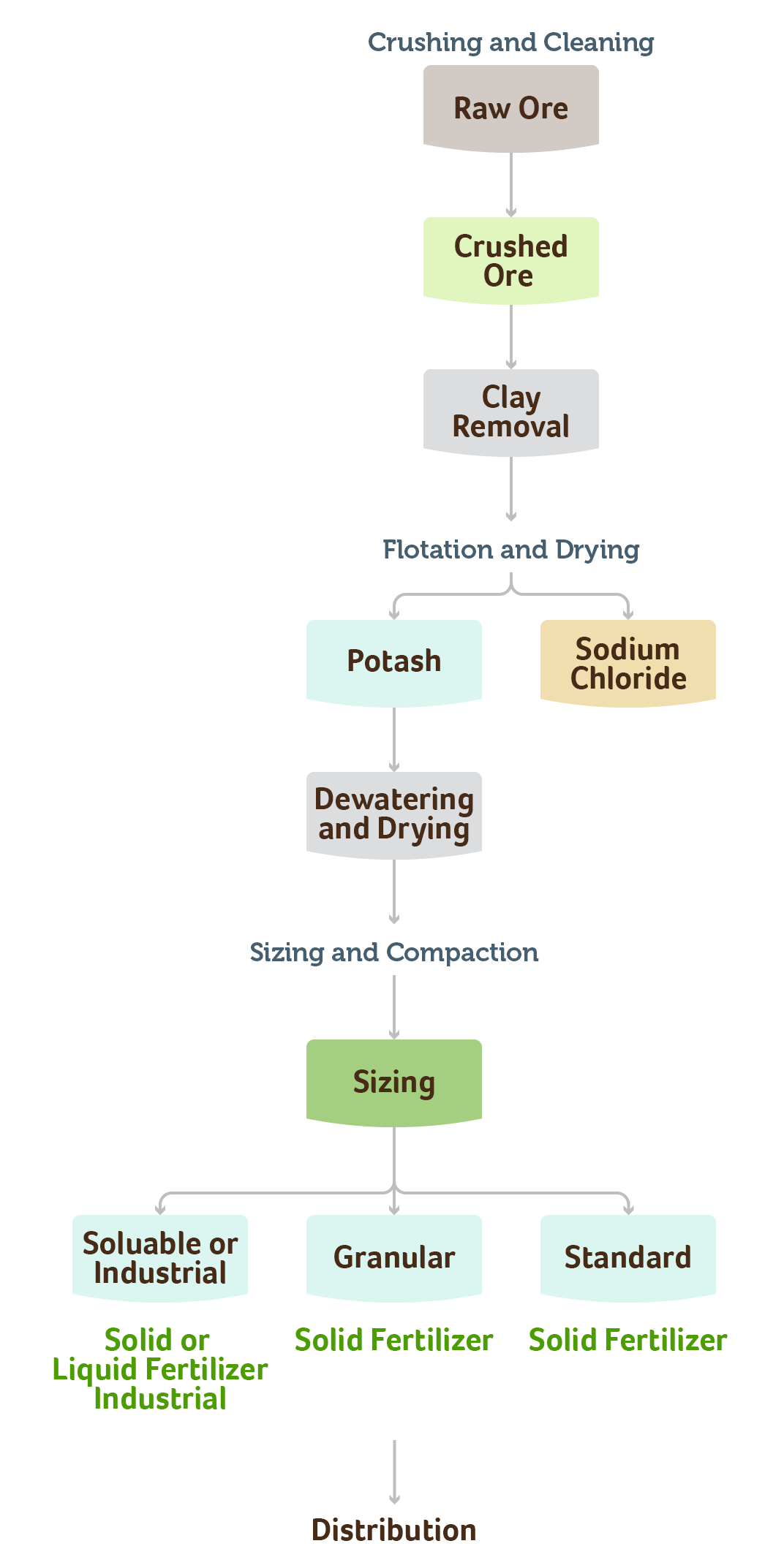
Potash processing flow showing crushing, separation, flotation, drying, and final fertilizer products.
why potash is important for agriculture
Potash provides potassium, one of the three essential nutrients plants need for healthy growth, along with nitrogen and phosphorus.
Potassium plays a key role in:
Improving water retention in plants
Strengthening root systems
Increasing resistance to disease
Enhancing crop yield and quality
Without potash, modern agriculture would not be able to sustain current global food demands.
supporting reliable mining operations
From deep underground deposits to global agricultural use, the journey of potash highlights the importance of geology, engineering, and processing expertise.
At Progressive Sealing, many of the environments we work in are connected to industries such as potash mining, where reliability, durability, and performance are critical for safe and efficient operations.